
About Belize
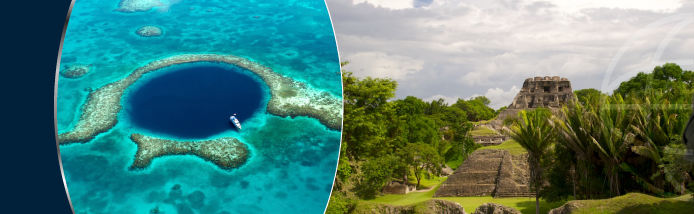
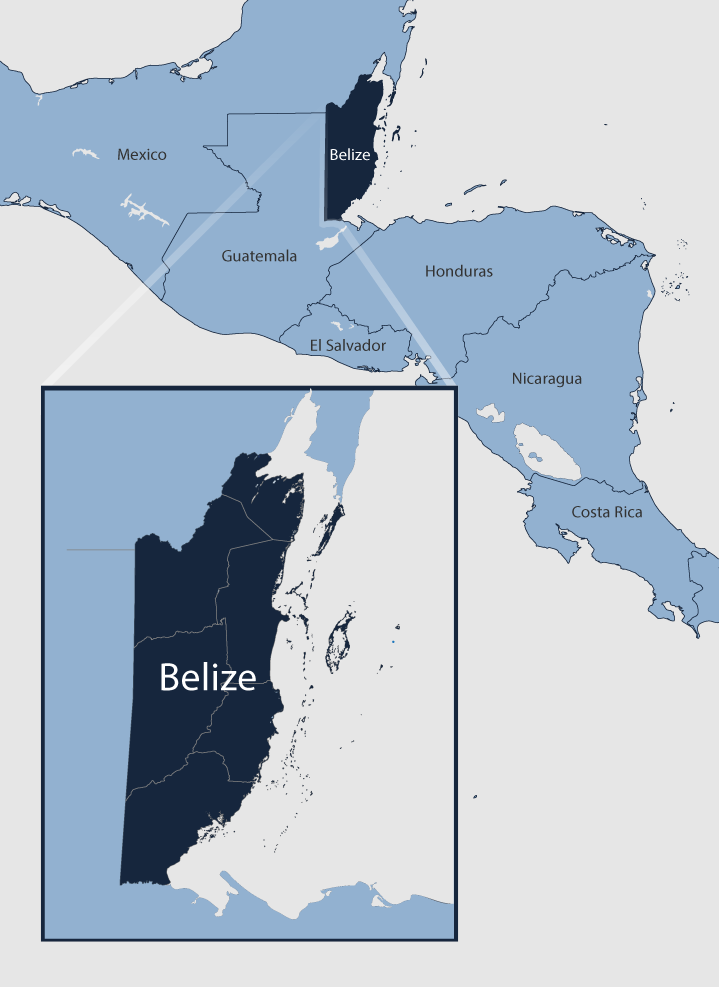 Belize is a sovereign, independent country located on the Caribbean Sea in mainland Central America – with Mexico to the North and Guatemala to the South and West. It has a population of about 350,000 and covers an area 8,867 square miles (or 22,966 square kilometers). For nearly 4,000 years, it formed the keystone of the empire of the ancient Maya who developed, what was for their time, the most advanced civilisation in the New World. English is the official language although Spanish is also widely spoken. The ethnic mix is one of the most diverse in the Western Hemisphere and Belize is haven of tranquility with a rare level of social harmony.
Under British rule and following Independence in 1981, Belize has enjoyed a history of peace, stability and democracy. While still a colonial state called British Honduras, self-government was achieved in 1964 and the name Belize was restored in 1973.
The legal system of Belize is founded on English Common Law supplemented by local legislation. The certainty with which the affairs of the professional and business community are conducted, particularly trust and commercial matters, is a tribute to this solid foundation and the continuing high standards of training and practice of the professional and financial community in Belize. The Belize Court system is modelled on the English system and the court of final appeal on questions of law is the Caribbean Court of Justice.
The political system is based upon the Westminster model, with Queen Elizabeth II (represented by a Governor-General in Belize) as Head of State. Executive authority in Belize is exercised by the Cabinet under the leadership of the Prime Minister, and new legislation is enacted by a 31-member House of Representatives (elected by universal adult suffrage every five years) and 12-member appointed Senate. There are two major political parties – the Peoples United Party and the United Democratic Party. Both parties are committed to the economic development of the country and to the expansion of the international financial services industry.
Belize is a member of the Commonwealth of Nations, United Nations, Caribbean Common Market (CARICOM), Non-Aligned Movement, Organisation of American States (OAS), International Monetary Fund, World Bank, Caribbean Development Bank, Inter-American Development Bank and SICA (the Central American Integration System)- as well as many other regional and international organisations.
Unlike many of the island offshore jurisdictions, Belize still relies heavily on its rich farmlands – with sugar, bananas and citrus being the main export crops. Lobster, shrimp and other marine products also contribute significantly to the country’s foreign exchange earnings.
However, in recent years, it is the growth of both the tourism and international financial services industries that has helped to put Belize firmly on the map. With the expansion of trade-liberalisation programmes and greater accessibility to world markets becoming ever easier, effective tax planning and financial management have become critical tools in the development of a comprehensive strategic plan for individuals and corporations alike.
Belize enjoys excellent telecommunication services worldwide (with a fiber-optic infrastructure and the latest 4G cellular technology), efficient international courier services and direct flights to the USA (Houston, Miami, Atlanta, Dallas, Los Angeles and New York) and Central America – all offering world-wide connections.